In the rapidly evolving landscape of enterprise web development, the choice between microservices and monolithic architecture has become increasingly intertwined with JavaScript framework selection. As we approach 2026, this relationship grows more critical than ever for organizations seeking scalable, maintainable, and efficient solutions. The right JavaScript framework can either amplify or undermine your architectural decisions, making this combination a strategic consideration for any serious enterprise development team.
This comprehensive guide explores how JavaScript frameworks for enterprise applications influence and are influenced by architectural choices. We’ll examine why this intersection matters for scaling in 2026, how different frameworks perform in various architectural contexts, and what you need to consider when planning your next enterprise application.
Whether you’re building a massive e-commerce platform, a complex financial system, or a scalable SaaS product, understanding this relationship is crucial for long-term success.
Understanding the Core Concepts: Architecture Meets Framework
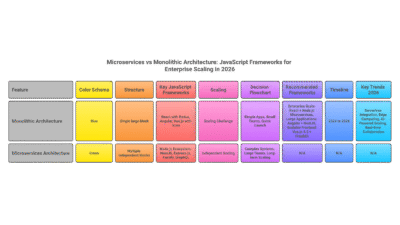
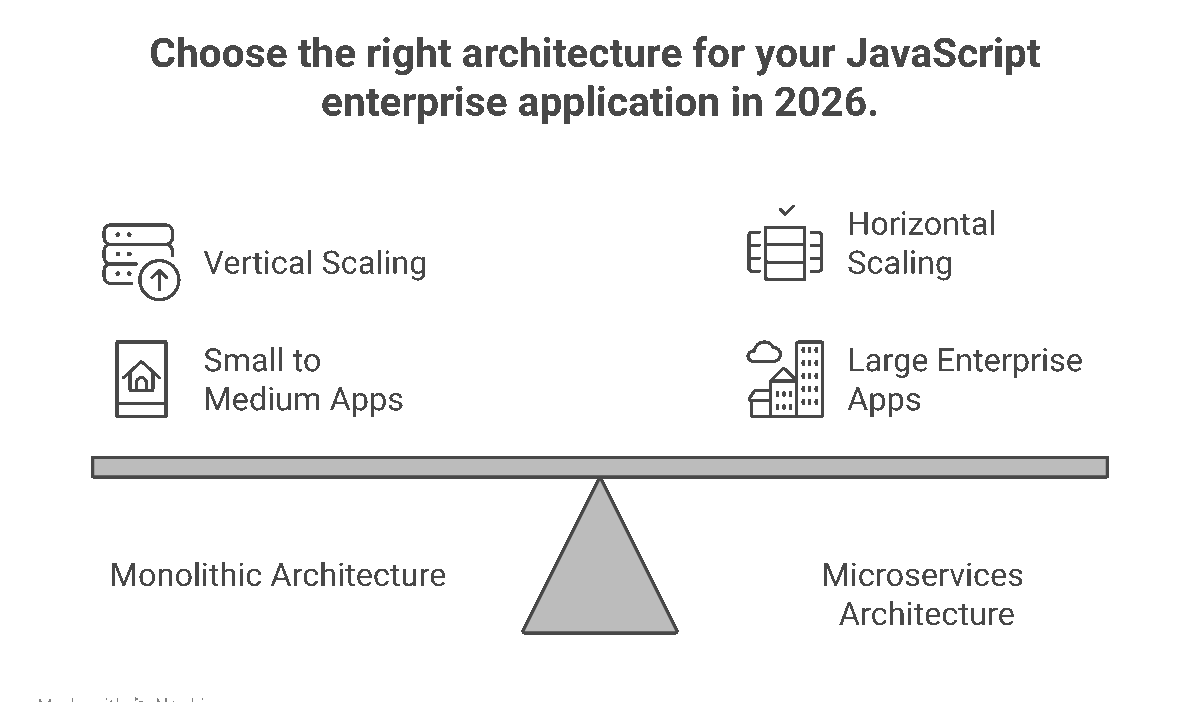
Before diving into specific frameworks, let’s clarify the fundamental concepts. Monolithic architecture refers to a single, unified codebase where all components are tightly coupled and deployed together. This traditional approach offers simplicity in development and deployment but can become challenging to scale and maintain as applications grow. Microservices architecture, on the other hand, breaks applications into smaller, independent services that communicate through APIs. This approach offers better scalability and flexibility but introduces complexity in coordination and deployment.
JavaScript frameworks serve as the building blocks that implement these architectural patterns. The framework you choose determines how easily you can implement either architecture, how well your application scales, and how maintainable your codebase remains over time. In 2026, we’re seeing frameworks evolve specifically to address the challenges of both architectural approaches, with some excelling in monolithic contexts and others designed from the ground up for microservices.
Top JavaScript Frameworks for Enterprise Applications in 2026
1. Next.js:
The undisputed leader for enterprise applications, Next.js combines React’s power with built-in server-side rendering, static site generation, and API routes. Its hybrid approach makes it equally suitable for both monolithic and microservices architectures. For monolithic applications, Next.js provides a comprehensive solution with routing, API handling, and rendering in one package. For microservices, its API routes can serve as individual service endpoints while maintaining a unified frontend experience.
2. React with Modern Tooling:
While React itself is a library rather than a framework, when combined with modern tooling like Vite, TypeScript, and state management solutions, it becomes a formidable enterprise framework. React’s component-based architecture naturally aligns with microservices thinking, where components can be developed and deployed independently. Its massive ecosystem and corporate backing from Meta make it a safe choice for large organizations.
3. Angular:
Google’s full-featured framework continues to excel in enterprise environments, particularly for monolithic applications. Angular’s opinionated structure, built-in dependency injection, and comprehensive tooling make it ideal for large teams working on complex applications. While it can work with microservices, its design philosophy leans toward cohesive, tightly integrated applications.
4. Vue 3 with Composition API:
Vue’s latest iteration brings enterprise-ready features while maintaining its signature approachability. The Composition API provides better TypeScript support and more flexible code organization, making Vue suitable for both small and large applications. Vue’s progressive nature allows teams to start simple and scale up as needed.
5. SvelteKit:
The rising star in enterprise development, SvelteKit offers a compiler-based approach that results in smaller bundle sizes and better performance. Its simplicity and developer experience make it attractive for teams looking to reduce complexity while maintaining scalability. SvelteKit’s file-based routing and server-side rendering capabilities make it suitable for various architectural patterns.
Architectural Considerations for Each Framework
Monolithic Architecture with JavaScript Frameworks: When building monolithic applications, frameworks like Angular and Next.js shine. Angular’s comprehensive nature provides everything you need in one package, reducing integration complexity. Next.js offers a similar all-in-one experience with its built-in routing, API handling, and rendering strategies. The key advantage here is development simplicity – teams can focus on building features rather than configuring infrastructure.
Microservices Architecture with JavaScript Frameworks: For microservices, React and Vue offer more flexibility. Their component-based nature aligns well with service boundaries, allowing different teams to own different parts of the application. Next.js also works well in microservices contexts through its API routes, which can serve as individual service endpoints. The challenge becomes coordinating between services and managing shared dependencies, which modern frameworks address through module federation and other advanced techniques.
Choosing the Right Framework Based on Project Requirements
Selecting the best JavaScript framework for your enterprise application requires careful consideration of several factors. First, assess your team’s expertise – adopting a framework your team already knows can accelerate development and reduce learning curves. Consider your application’s complexity: simple applications might benefit from Vue’s approachability, while complex enterprise systems might require Angular’s comprehensive structure or Next.js’s hybrid capabilities.
Evaluate your scalability requirements: if you anticipate rapid growth or need to handle massive traffic, consider frameworks with strong server-side rendering capabilities like Next.js or SvelteKit. For applications requiring real-time updates or complex state management, React’s ecosystem provides robust solutions. Don’t forget about long-term maintenance: choose frameworks with strong corporate backing, active communities, and clear upgrade paths to ensure your application remains viable for years to come.
Implementation Strategies for 2026 Scaling
As we look toward 2026, several implementation strategies emerge for scaling enterprise applications. First, consider a hybrid approach: start with a monolithic architecture using a framework like Next.js or Angular, then gradually extract services as needed. This allows you to benefit from development simplicity while maintaining the option to scale horizontally when required.
Second, leverage modern deployment techniques: containerization with Docker and orchestration with Kubernetes work well with JavaScript frameworks in both architectural patterns. Third, implement robust monitoring and observability from day one – regardless of your chosen architecture or framework, understanding your application’s performance is crucial for scaling decisions. Finally, invest in developer experience: choose frameworks and tools that make your team productive and happy, as developer satisfaction directly impacts code quality and maintainability.
Conclusion: Strategic Framework Selection for Future-Proof Architecture
The choice between microservices and monolithic architecture in 2026 cannot be separated from JavaScript framework selection. Each framework brings different strengths to different architectural patterns, and understanding these relationships is key to building scalable enterprise applications. Next.js emerges as a versatile choice suitable for both architectures, while React offers maximum flexibility for teams comfortable with assembling their own tooling.
Remember that the ‘best’ framework depends on your specific context: team expertise, application requirements, scalability needs, and long-term maintenance considerations. As we move toward 2026, focus on frameworks that offer strong TypeScript support, excellent developer experience, and clear migration paths. Whether you choose microservices or monolithic architecture, the right JavaScript framework will help you build applications that scale, perform, and evolve with your business needs.