As we approach 2026, the landscape of enterprise application development continues to evolve rapidly, with cloud-native technologies becoming the cornerstone of modern software architecture. The shift toward cloud-native application development has fundamentally changed how enterprises build, deploy, and scale their JavaScript applications. This transformation isn’t just about moving to the cloud—it’s about embracing a new paradigm where containers and microservices, DevOps cloud-native stacks, and cloud-native platforms define success.
For enterprise decision-makers and development teams, choosing the right JavaScript framework has never been more critical. The framework you select must not only provide robust features and performance but also integrate seamlessly with cloud-native tools and infrastructure. This comprehensive guide explores the best JavaScript frameworks for enterprise applications in 2026, with a particular focus on their compatibility with cloud-native technologies and their ability to support scalable, resilient, and maintainable business solutions.
Understanding Cloud-Native Technologies and Their Impact
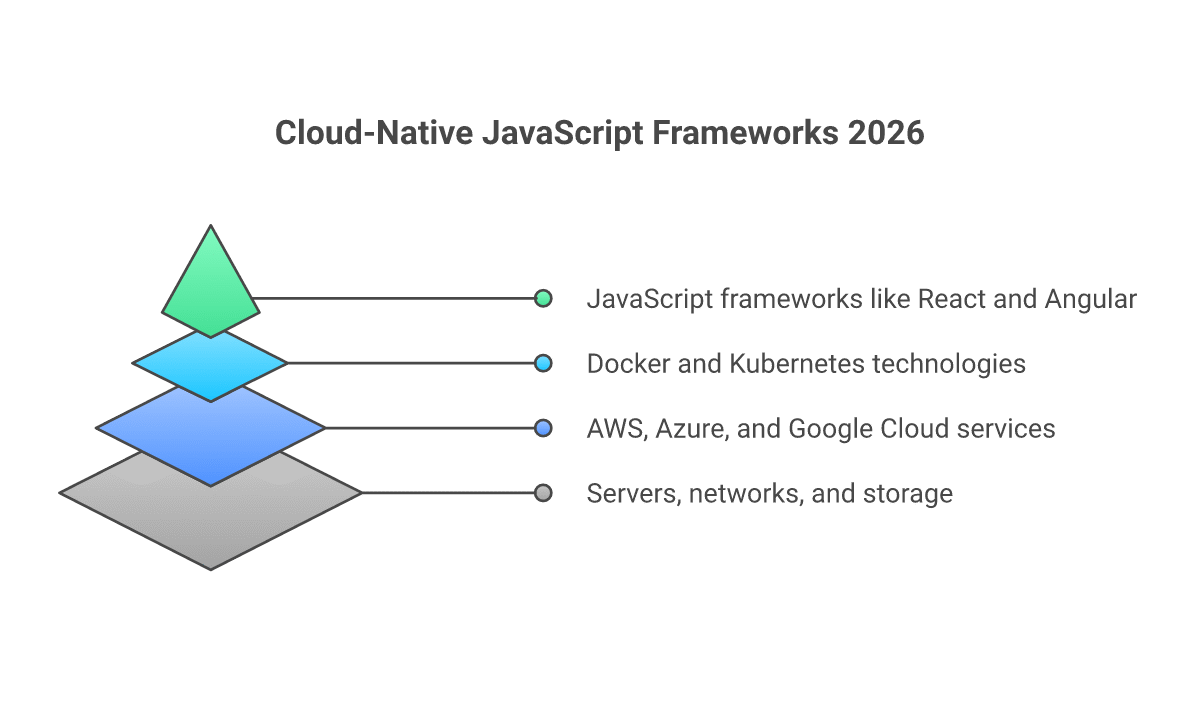
Before diving into specific frameworks, it’s essential to understand what cloud-native technologies entail and why they matter for enterprise JavaScript development. Cloud-native refers to applications specifically designed to leverage cloud computing models, taking full advantage of distributed systems, microservices architecture, containerization, and continuous delivery.
The core components of cloud-native application development include containers (like Docker), orchestration platforms (particularly Kubernetes), microservices architecture, DevOps practices, and cloud-native platforms that provide managed services. These technologies enable enterprises to build applications that are scalable, resilient, and easily maintainable across different cloud environments. For JavaScript frameworks, this means they must support containerization, work well with microservices, integrate with DevOps pipelines, and provide the observability and monitoring capabilities that cloud-native operations require.
Top JavaScript Frameworks for Enterprise Applications in 2026
1. Next.js 15+ with Cloud-Native Enhancements:
Next.js continues to dominate the enterprise space with its hybrid rendering capabilities, excellent TypeScript support, and robust ecosystem. In 2026, its cloud-native integration has reached new heights with built-in support for edge computing, serverless functions, and seamless Kubernetes deployment. Notable users include Netflix, Uber, and Twilio. Pros: Exceptional developer experience, automatic code splitting, built-in image optimization. Cons: Can be opinionated about routing and data fetching patterns.
2. NestJS 12+ for Microservices Architecture:
Specifically designed for building efficient, scalable server-side applications, NestJS provides a complete framework for creating enterprise-grade microservices. Its modular architecture, dependency injection, and extensive ecosystem make it ideal for cloud-native environments. Pros: Excellent TypeScript support, modular structure, strong community. Cons: Steeper learning curve, primarily backend-focused.
3. React 19+ with Enterprise Extensions:
While React itself is a library rather than a full framework, its ecosystem has matured significantly for enterprise use. When combined with cloud-native tools like React Server Components, Suspense for data fetching, and integration with micro-frontend architectures, React becomes a powerhouse for enterprise applications. Notable users: Facebook, Airbnb, Dropbox. Pros: Massive ecosystem, excellent performance, strong community. Cons: Requires additional libraries for full framework capabilities.
4. Angular 20+ with Cloud-Native Tooling:
Google’s comprehensive framework continues to evolve with enhanced cloud-native capabilities, including improved server-side rendering, better tree-shaking, and tighter integration with cloud platforms. Its opinionated structure makes it ideal for large teams working on complex enterprise applications. Pros: Complete framework solution, excellent tooling, strong typing. Cons: Larger bundle sizes, steeper learning curve.
5. SvelteKit 3.0+ for Performance-Critical Applications:
Svelte’s innovative compile-time approach produces highly optimized JavaScript, making it ideal for performance-sensitive enterprise applications. SvelteKit provides a full-stack framework that works exceptionally well with cloud-native deployment patterns. Pros: Excellent performance, smaller bundle sizes, intuitive syntax. Cons: Smaller ecosystem compared to React/Angular.
6. Remix 3.0+ for Progressive Enhancement:
Built on React fundamentals, Remix focuses on web standards and progressive enhancement, making it ideal for enterprise applications that need to work across diverse network conditions and devices. Its cloud-native deployment story is particularly strong with various hosting providers. Pros: Excellent performance, progressive enhancement focus, strong routing. Cons: Relatively new compared to established frameworks.
7. Express.js 6.0+ with Cloud-Native Middleware:
While minimalist by design, Express.js remains a critical component in many enterprise JavaScript stacks, particularly for API development and microservices. The 2026 version includes enhanced cloud-native middleware and better integration with container orchestration platforms. Pros: Minimalist, flexible, massive middleware ecosystem. Cons: Requires more configuration for complex applications.
8. Fastify 5.0+ for High-Performance APIs:
Designed specifically for performance, Fastify has become the go-to choice for enterprise API development in cloud-native environments. Its plugin architecture and excellent TypeScript support make it ideal for microservices. Pros: Exceptional performance, excellent plugin system, strong validation. Cons: Smaller community than Express.js.
Key Considerations for Cloud-Native JavaScript Framework Selection
When selecting a JavaScript framework for enterprise applications in 2026, several cloud-native specific factors should guide your decision:
Container Compatibility: Ensure the framework works well with Docker containers and Kubernetes orchestration. Look for frameworks with small base images, efficient build processes, and good support for multi-stage builds.
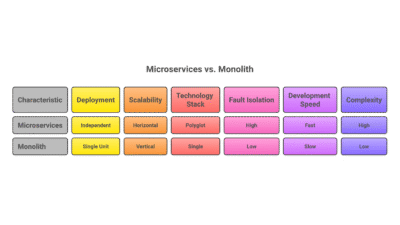
Microservices Readiness: For distributed systems, evaluate how well the framework supports microservices architecture patterns, including service discovery, inter-service communication, and distributed tracing.
DevOps Integration: Consider how easily the framework integrates with your DevOps cloud-native stack, including CI/CD pipelines, automated testing, and deployment automation.
Choosing Based on Project Requirements
The best framework depends on your specific enterprise requirements:
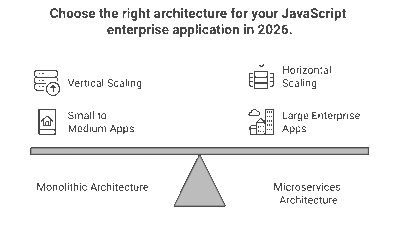
For Large-Scale Enterprise Applications with Complex Business Logic: Consider Angular or NestJS for their comprehensive structure and strong typing. These frameworks excel in environments where multiple teams need to collaborate on complex codebases.
For Performance-Critical Customer-Facing Applications: Next.js or SvelteKit offer excellent performance characteristics and work well with edge computing platforms. Their hybrid rendering capabilities provide both speed and SEO benefits.
For Microservices and API-First Architectures: Fastify or NestJS provide excellent performance and structure for building distributed systems. Their plugin architectures and TypeScript support make them ideal for enterprise microservices.
Implementation Best Practices for Cloud-Native JavaScript
Regardless of which framework you choose, following cloud-native best practices is essential:
Containerize Early: Start with containerization from day one. Use multi-stage Docker builds to create optimized production images and ensure your framework supports this pattern.
Implement Health Checks: All cloud-native applications should include comprehensive health checks. Ensure your framework supports readiness and liveness probes for Kubernetes deployment.
Design for Failure: Implement circuit breakers, retry logic, and fallback mechanisms. Cloud-native applications must be resilient to network failures and service disruptions.
Conclusion
As we look toward 2026, the convergence of JavaScript frameworks and cloud-native technologies represents a significant opportunity for enterprises to build more scalable, resilient, and maintainable applications. The key to success lies in selecting frameworks that not only meet current requirements but also align with cloud-native principles and future technology trends.
Remember that the best framework is the one that fits your specific enterprise context, team expertise, and business objectives. By focusing on cloud-native compatibility, considering your specific use cases, and following established best practices, you can build enterprise JavaScript applications that are ready for the challenges and opportunities of 2026 and beyond. The future of enterprise JavaScript is cloud-native, and the frameworks discussed here provide the foundation for building applications that can thrive in this evolving landscape.